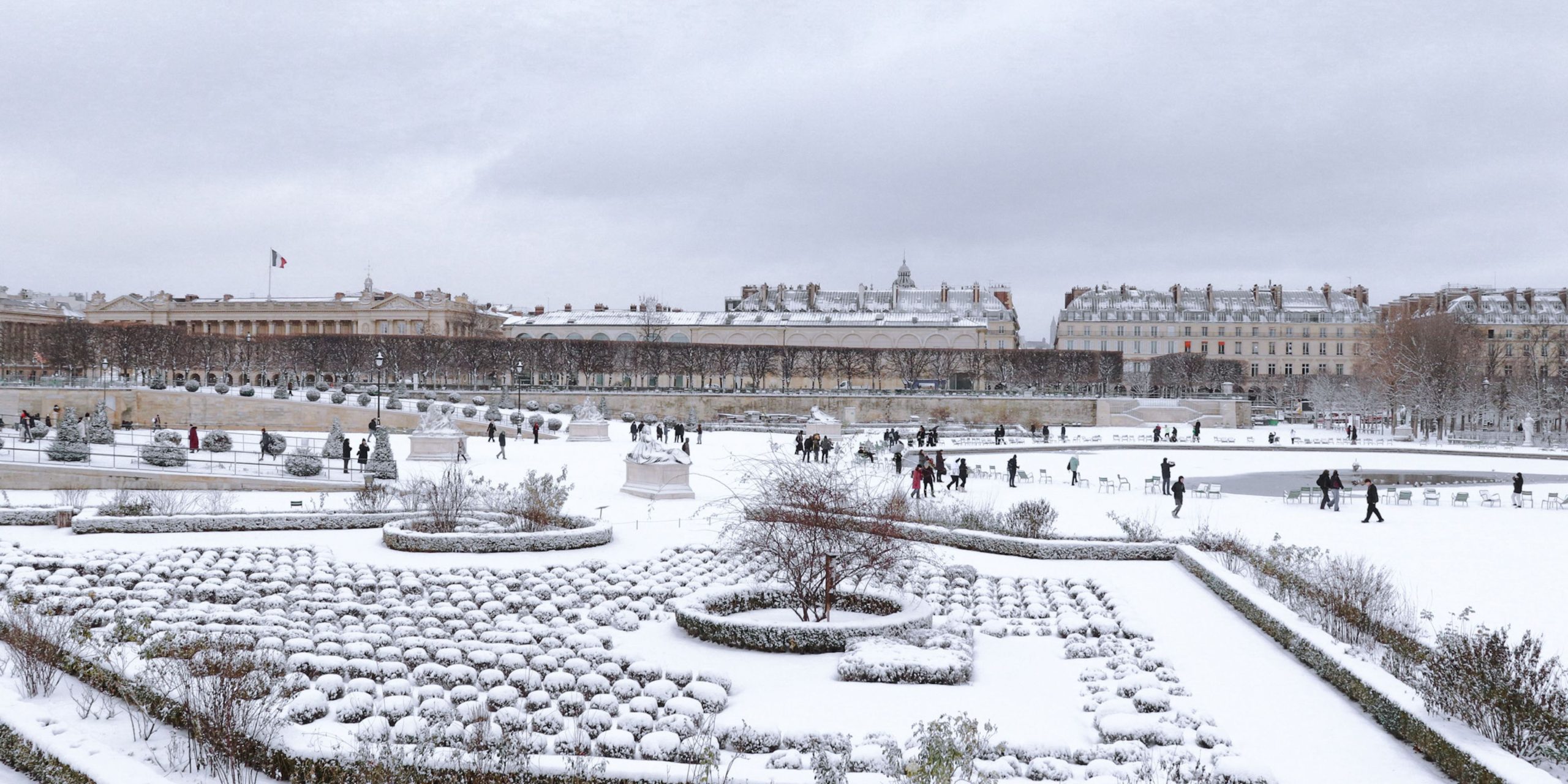
Paris is one of those cities where even the parts that aren’t on the itinerary end up being some of the most memorable. The structured parts of a GLO program — company visits, faculty seminars, group dinners — run on a fixed schedule. The hours in between are yours, and in Paris, knowing what to do with them is the difference between a city you pass through and a city that actually stays with you.
The guides that show up when you search “things to do in Paris” tend to recommend the same ten monuments in the same order, which is fine if you have a week and unlimited budget. If you have a free afternoon, a limited amount of euros, and want to see something that feels real, the approach needs to be different. This guide covers the Paris that students actually explore on programs like this one — specific neighbourhoods, specific places, and specific tips for getting into world-class museums for free or nearly free.
January in Paris runs cold, usually between 3°C and 8°C, with reliable grey skies and the occasional sharp rain. Bring layers, waterproof shoes, and the knowledge that the city looks genuinely beautiful in winter light when the crowds are thinner than July and the covered passages are exactly as warm as you’d want them to be.
Le Marais: the neighbourhood for wandering
If you only have one free afternoon and want to give it to a single neighbourhood, Le Marais is the right answer. Spread across the 3rd and 4th arrondissements on the Right Bank, it is the part of Paris that rewards wandering with no particular agenda — the kind of neighbourhood where you turn a corner and find yourself standing in a 17th-century square that happens to still be completely intact.
Place des Vosges is the anchor. Built between 1612 and 1614, it is the oldest planned square in Paris and still one of the most beautiful public spaces in the city, with colonnaded arcades running along all four sides and a garden in the centre. Entry is free, there are benches everywhere, and it looks nothing like the Paris of the Eiffel Tower postcards. It is also directly adjacent to the Musée Picasso, which is worth the detour if you have extra time.
From Place des Vosges, the neighbourhood sprawls in every direction. The Jewish Quarter on Rue des Rosiers has been here since the 13th century. The boutiques along Rue de Bretagne and Rue de Saintonge range from independent designers to vintage shops to a very good covered food market at the Marché des Enfants Rouges, which is the oldest covered market in Paris and a genuinely excellent place to have lunch standing up for under €12.
The practical advice for Le Marais is to give it at least two hours and not to rush it. The neighbourhood is dense and walkable, the architecture rewards looking up, and the side streets off the main drags tend to be quieter and more interesting than the streets that show up on tourist maps.
The covered passages: the Paris most tourists never find
Paris has a network of 19th-century covered shopping arcades called passages couverts — glass-roofed pedestrian galleries that were the shopping centres of their era, built before department stores existed. Most of the city’s thirty-odd original passages have disappeared. The ones that remain are among the most atmospheric places in Paris and are almost entirely free to visit.
Galerie Vivienne at 6 Rue Vivienne in the 2nd arrondissement is the most spectacular of them, with mosaic tile floors, ornate ironwork, and a glass ceiling that fills the whole gallery with filtered light. It dates from 1823, and the combination of boutiques, a wine shop, and a tea room inside makes it feel more like a film set than a functioning commercial space. It is open daily from 8:30am to 8:30pm and entry is completely free.
Passage des Panoramas at 11 Boulevard Montmartre is slightly grittier than Galerie Vivienne and, for that reason, more interesting. It was one of the first public spaces in Paris to be lit by gas in the early 19th century and still has an end-of-era feel to it — stamp dealers, old print sellers, a couple of restaurants, and the sense that you’ve walked sideways out of the present. The covered passages are the version of Paris that most visitors miss entirely, and they are exactly the kind of thing a free afternoon is built for.
Museums: how students actually get in for free
Paris has some of the best museums in the world and a pricing structure that is significantly more generous to students than most visitors realise.
Students who are EU residents under the age of 26 get free entry to all French national museums, which includes the Louvre, the Musée d’Orsay, and the Pompidou. If you are not an EU resident, there are still specific free windows worth planning around.
The Louvre offers free admission on the first Friday evening of each month from September through June, from 6pm to 9:45pm — but you need to book in advance through their website, because walk-in capacity is limited on those evenings. If your program dates land near one of those Fridays, it is worth booking as soon as you know your schedule.
The Musée d’Orsay and Centre Pompidou are both free to enter on the first Sunday of each month. The Orsay is the one not to miss if you only go to one — it houses Monet, Renoir, Van Gogh, and Degas in a converted 19th-century railway station on the Left Bank, and the building itself is worth the visit before you get to a single painting. Plan for a first Sunday if your program falls across one.
The Petit Palais is permanently free for its permanent collection regardless of age or nationality. It is a genuinely good museum — 19th-century French paintings and decorative arts in an ornate Beaux-Arts building — and because it is less famous than the Louvre, it is also significantly less crowded. If you have a few free hours and want a museum visit without the tourist volume, the Petit Palais is the right choice.
Montmartre and the view
Montmartre is the one neighbourhood in Paris that manages to be both genuinely touristic and genuinely beautiful at the same time. The butte — the hill the neighbourhood sits on — gives you the best panoramic view of the city without paying for any kind of observation deck, and the streets descending from Sacré-Cœur are some of the most distinctly Parisian in terms of architecture, street width, and general atmosphere.
The basilica itself is free to enter and worth going inside, even briefly. The mosaic above the choir is one of the largest in the world. The steps in front of it are where most students end up sitting to look at the view.
Rue Lepic descending from Montmartre is the most interesting route back down — it has the feel of a working neighbourhood market street, with butchers, cheese shops, and fruit vendors mixed in between the tourist cafes. It is also where Vincent van Gogh lived for two years in the 1880s, at number 54, which is now an ordinary apartment building with a plaque.
The practical timing for Montmartre is mid-morning on a weekday, before the day-trip crowds arrive from the Paris tourist centres. January means shorter queues and colder air, both of which make the view considerably better to actually stand in front of for more than thirty seconds.
Canal Saint-Martin and the East
Canal Saint-Martin is where Parisians go when they are not performing Paris for visitors. The canal runs through the 10th arrondissement from the Gare de l’Est down toward the Seine, lined with iron footbridges, tree-lined quays, and a neighbourhood of independent boutiques, bookshops, and coffee bars that has become the clearest expression of where the city’s culture actually sits in 2025.
In January the canal is quieter than summer, when the quays are crowded with evening picnics. The buildings along Quai de Valmy and Quai de Jemmapes are worth looking at in their own right, and the neighbourhood around Place Sainte-Marthe — a few streets back from the canal — has some of the best small restaurants in the city for an affordable dinner.
The Canal Saint-Martin is a thirty-minute walk from Le Marais, which makes combining the two into a single afternoon a natural half-day itinerary: Le Marais for the morning, lunch at the Marché des Enfants Rouges, and the canal for the afternoon.
The Latin Quarter and Shakespeare and Company
The Latin Quarter in the 5th arrondissement is the historic student neighbourhood — the Sorbonne has been here since the 13th century, and the streets around it still carry that character. Boulevard Saint-Michel is the main artery, but the most interesting part of the neighbourhood is the network of streets running between the university and the Seine.
Shakespeare and Company at 37 Rue de la Bûcherie is the single most famous English-language bookshop in the world, and it is also genuinely one of the best small independent bookshops you will walk into anywhere — three floors of new and secondhand books, a narrow staircase covered in handwritten notes, and a café that opened in the building next door a few years ago. It is free to browse, welcoming of students who linger, and directly across the Seine from Notre-Dame.
Notre-Dame Cathedral, which reopened in December 2024 following five years of reconstruction after the 2019 fire, is a ten-minute walk from Shakespeare and Company along the Quai de Montebello. Entry to the cathedral is free, and what is visible of the restoration work from inside is worth seeing in its own right as a live conservation project of extraordinary scale.
Two streets back from the Seine, Rue Mouffetard is one of the oldest market streets in Paris, running from the church of Saint-Médard down through the 5th arrondissement. The lower end of the street has a daily outdoor market with some of the cheapest fresh food and sandwiches in central Paris, which makes it the right answer for lunch if you are anywhere in the Latin Quarter.
Free views without paying for them
The Galeries Lafayette department store on Boulevard Haussmann has a rooftop observation deck with a panoramic view of Paris that is completely free to access. Take the escalators to the top floor of the main building and continue up to the terrace. No ticket, no queue, no admission. The view of Sacré-Cœur from here is one of the better ones in the city.
Pont de la Tournelle, the bridge on the Left Bank between the 4th and 5th arrondissements, has one of the cleanest sightlines of Notre-Dame and the Seine you will find. Sunset from the bridge, with Notre-Dame lit from behind and the water reflecting the sky, is the Paris view that people end up photographing more than the Eiffel Tower once they know it exists.
For a free organised perspective on the city, Paris Greeters offers free walking tours led by local Parisians — not professional guides, but residents who volunteer to show visitors the parts of the city they actually care about. Tours are booked in advance and customised around the neighbourhood you want to see and your available time. The quality varies, but the ones led by residents with a strong attachment to a specific area tend to be genuinely excellent.
Practical tips
The covered passages close in the evening. Galerie Vivienne runs until 8:30pm, but some smaller passages close earlier, particularly on Sundays. Aim for a weekday afternoon visit rather than relying on evening hours.
Paris is a walking city, and January rewards it. The crowds that make certain parts of Paris genuinely unpleasant in July and August simply aren’t there in January. The Louvre’s Richelieu wing on a weekday afternoon in winter is a different experience from the Louvre in summer. Use the cold.
Load your Navigo or buy a carnet before you need it. The Paris metro is efficient and cheap. A ten-trip carnet costs around €17 and covers unlimited zones within the city. The metro app and Google Maps both handle Paris navigation accurately. Download an offline map before leaving the hotel.
Lunch under €12 is always available if you know where to look. A boulangerie sandwich on a baguette from a proper bakery costs around €4. The markets — Marché des Enfants Rouges in Le Marais, the lower end of Rue Mouffetard in the Latin Quarter — are the best options for a full meal at reasonable prices. Avoid sitting down in cafes directly adjacent to major tourist sites unless you have made peace with €18 croque monsieurs.
The Latin Quarter and Le Marais are fifteen minutes apart on foot. Most of what is worth doing on a single free day in Paris is walkable as a connected loop: Louvre area in the morning, across the Pont des Arts to the Left Bank, through the Latin Quarter for lunch, back across to Le Marais for the afternoon, and Canal Saint-Martin for dinner. That is roughly eight to ten kilometres of walking, which is manageable and covers a significant part of the central city.
Frequently asked questions
A significant portion of Paris is free for students who know where to look. The Petit Palais has a permanently free permanent collection. EU residents under 26 get free entry to all French national museums including the Louvre and Musée d’Orsay. The first Sunday of each month brings free entry to the Musée d’Orsay and Centre Pompidou. The covered passages — Galerie Vivienne and Passage des Panoramas — are free to visit and genuinely worth an hour. Notre-Dame Cathedral, Sacré-Cœur, Père Lachaise Cemetery, Luxembourg Gardens, the Canal Saint-Martin, and the Galeries Lafayette rooftop are all free. Paris Greeters offers free neighbourhood walking tours with local volunteers.
Le Marais in the 3rd and 4th arrondissements is the strongest single answer — dense, walkable, architecturally intact, and with enough variety (Place des Vosges, the Marché des Enfants Rouges, the Jewish Quarter, the boutique streets around Rue de Bretagne) to fill a half-day without doubling back. The Latin Quarter is the complementary choice for the afternoon, particularly if you add Shakespeare and Company and a walk along the Seine toward Notre-Dame. The Canal Saint-Martin in the 10th is the right answer if you want a neighbourhood that feels less like a tourist destination.
EU residents under 26 get free permanent collection entry to all French national museums. For students outside the EU, the most reliable free windows are: first Sunday of each month at the Musée d’Orsay and Centre Pompidou, and first Friday evening of each month (6pm to 9:45pm, booking required) at the Louvre. The Petit Palais permanent collection is always free regardless of age or nationality. Many temporary exhibitions at national museums also offer reduced student pricing with a valid student ID.
EU residents under 26 have free access to the Louvre at any time. Students outside the EU can enter for free on the first Friday evening of each month from September through June (6pm to 9:45pm), but advance booking through the Louvre’s website is required because walk-in capacity is limited on those evenings. Outside of those windows, a standard Louvre ticket costs €22. If you are on a tight budget and not eligible for free entry, the first Friday evening window is worth planning your schedule around.
The passages couverts are 19th-century glass-roofed pedestrian arcades that were Paris’s original indoor shopping centres, built before department stores existed. Around thirty of the original network remain, and several are preserved in excellent condition. Galerie Vivienne at 6 Rue Vivienne is the most ornate, with mosaic floors and iron detailing, and is open daily until 8:30pm with free entry. Passage des Panoramas at 11 Boulevard Montmartre is slightly rougher but has more character and is one of the oldest in the city. Both are in the 2nd arrondissement and easily combined in a single visit.
The most effective free afternoon in Paris starts with a neighbourhood rather than a list of monuments. Le Marais for a few hours of walking, a stop at the Marché des Enfants Rouges for lunch, and either the Canal Saint-Martin or the Latin Quarter depending on which direction you want to go. If museum entry works with your timing, the Petit Palais requires no planning and no cost. If it is a first Sunday of the month, the Musée d’Orsay takes priority. Add a detour through Galerie Vivienne on the way back toward the hotel, and you have a genuinely full afternoon.
Yes, more so than most cities its size. The central arrondissements — 1st through 11th — are compact enough that Le Marais, the Latin Quarter, the Louvre area, and the Canal Saint-Martin are all within thirty minutes of each other on foot. The metro fills in the gaps efficiently when distances are longer, particularly for Montmartre in the north or the Eiffel Tower area in the west. Paris in January is cold but dry enough most days that a waterproof coat and comfortable shoes make it walkable without difficulty. Most students on GLO programs find that walking between destinations is one of the best parts of the city — the streets between places are often as interesting as the places themselves.
The company visits are the reason you’re in Paris. The hours between them are the reason you’ll remember it.
A GLO free time destination guide with more detailed suggestions for the winter program cities is in development. In the meantime, the map above and the neighbourhood list below cover enough ground for a well-spent afternoon anywhere in the city.