Study Abroad at 45: Charla Hawkins
Picture this: celebrating your birthday alone in London on New Year’s Eve, not with loneliness, but with profound empowerment. For most, this might sound daunting. For me, a 45-year-old business student and former critical care tech, it became the defining moment of my study abroad journey with Global Learning Opportunities.
“There is no greater education than travel.” These words resonated deeply as I stood in London that night, reflecting on the courage it took to finally accomplish something that had lived in my heart for decades. Studying abroad as an older student isn’t just about earning credits or visiting foreign companies—it’s about proving to yourself that reinvention knows no age limit.
Why Mature Students Bring Unique Strengths to Study Abroad
The decision to study abroad for older students carries different weight than it does for traditional college-age participants. After spending years as a critical care tech in high-pressure medical environments, returning to school full-time to pursue a Business Management and Marketing degree required tremendous courage. Adding international travel to that journey? That symbolized a complete turning point.
What I’ve learned is that life experience doesn’t hold you back from study abroad—it enhances it. The resilience I developed in healthcare, the empathy I practiced daily with patients, and my ability to stay grounded in chaos all became assets during my 14-day winter program through London, Paris, The Hague, and Amsterdam.
Mature students bring something invaluable to international education: perspective. When you’ve already built one career, navigated major life transitions, and developed a strong sense of self, you approach global learning differently. You ask better questions, make deeper connections between theory and practice, recognize patterns that younger students might miss.
During company visits with GLO, I found myself drawing parallels between healthcare systems and business operations—both require precision, teamwork, and quick decision-making. These weren’t abstract concepts I was learning for the first time; they were frameworks I could immediately understand and apply through the lens of my previous career.
Breaking Through the Comfort Zone: Solo Travel as a Catalyst for Growth
Navigating three countries in two weeks pushed me far outside my comfort zone. I wrestled with unfamiliar streets, new languages, and cultural differences that challenged my assumptions daily. But each obstacle became an opportunity to prove my capability.
That birthday in London stands out as a watershed moment. Instead of spending New Year’s Eve surrounded by family and friends as I had for four decades, I stood alone in a city I’d only visited briefly before. Rather than isolation, I felt liberation. I had trusted myself enough to get there, to navigate the journey, and to embrace the experience fully.
This is what study abroad programs for working professionals and mature students offer that textbooks cannot: the chance to test yourself in real-world situations where there’s no script, no safety net, just your resourcefulness and determination.
The moments that shaped me most weren’t always the planned ones:
- Figuring out the Tube system during rush hour when my phone died
- Ordering dinner in Paris using broken French and hand gestures
- Finding my way back to the hotel after taking a wrong turn in Amsterdam
- Striking up conversations with locals who helped me understand their cities
Each instance reinforced a critical truth: the same qualities that made me successful in critical care—problem-solving, flexibility, staying calm under pressure—were exactly what I needed to thrive abroad.
How Global Business Exposure Transforms Career Perspectives
The academic and professional value of GLO’s program exceeded my expectations. Visiting international companies and hearing directly from professionals working across borders gave me insights no classroom lecture could provide. I witnessed firsthand how cultural differences influence leadership styles, communication approaches, marketing strategies, and organizational behavior.
In The Hague, we met with a multinational corporation’s European leadership team. Their presentation on cross-cultural management made me realize how my healthcare background uniquely positioned me for global business roles. In healthcare, you must constantly adapt to different patient needs, family dynamics, and high-stakes situations—skills that translate directly to managing diverse teams and navigating international markets.
One executive shared a perspective that stuck with me: “The best global leaders are those who’ve learned to be comfortable being uncomfortable.” As a career-changer studying abroad as an older student, I embodied that principle daily. Every unfamiliar situation became practice for the adaptability that global businesses desperately need.
The program helped me connect business theories I study in my courses to tangible applications. Supply chain management made more sense after visiting a logistics hub in Amsterdam. International marketing came alive after analyzing how the same global brands adapted their messaging across London, Paris, and Dutch markets. Organizational behavior theory deepened after observing how professionals in different countries approached problem-solving and collaboration.
Building a Global Network That Transcends Age
One concern I initially had about studying abroad as a mature student was whether I’d connect with younger participants. Would there be an age gap that created distance? Would I feel out of place?
Those worries evaporated within the first two days. The beauty of GLO’s program structure is that it attracts diverse participants—undergraduate students, graduate learners, young professionals, and individuals like me who are building second careers. Our different backgrounds became our collective strength.
I found myself in fascinating conversations that I wouldn’t have experienced with only people my age:
A 22-year-old finance major taught me about emerging cryptocurrency trends in European markets. I shared insights about crisis management and emotional intelligence from my healthcare years. A recent MBA graduate and I discussed the challenges of career transitions over coffee in a Paris café. Students half my age asked thoughtful questions about balancing school with life responsibilities, while I learned from their fresh perspectives on digital marketing and social media strategy.
These connections extended beyond fellow students. During company visits, I networked with business leaders who appreciated my unique journey. Several executives specifically mentioned that my combination of healthcare experience and business education brought a valuable perspective that purely traditional business students might lack.
One hiring manager in London told me, “We need people who understand both operational excellence and human factors. Your background is exactly what multinational organizations are looking for.” That conversation crystallized my career direction in ways I hadn’t anticipated.
From Career Change to Career Clarity: Discovering Your Professional Path Abroad
Before the GLO program, I knew I wanted a career in business, but I wasn’t sure exactly where I fit. The international exposure provided that clarity.
Watching how businesses operate globally sparked specific interests I hadn’t fully recognized:
- Cross-Cultural Communication: I became fascinated by how companies navigate language barriers, cultural expectations, and regional business norms while maintaining brand consistency.
- International Marketing: Seeing the same products marketed differently across European countries made me realize how much strategy goes into global campaigns.
- People-Centered Leadership: The most successful international companies we visited prioritized employee well-being, diversity, and adaptive management—principles I deeply valued from healthcare.
I returned home with a clear professional goal: to work in roles that combine global strategy with people-focused business practices. My unique path—from critical care to business student to international program participant—isn’t a liability. It’s my competitive advantage.
The companies we visited consistently emphasized that they seek professionals who can think critically, adapt quickly, and bring diverse perspectives. Check, check, and check. My non-traditional journey suddenly felt like exactly the right preparation for a global business career.
Overcoming Self-Doubt: Why Age Is Your Asset, Not Your Obstacle
Returning to school later in life comes with internal battles that traditional students rarely face. There are moments of self-doubt: Am I too old for this? Have I missed my window? Can I compete with people half my age who grew up with technology and global awareness?
Study abroad became the antidote to those questions. It proved that age isn’t a barrier to growth—it’s a source of strength, perspective, and determination.
The maturity I brought to the experience allowed me to:
- Maximize every learning opportunity instead of treating it as just another requirement
- Ask deeper questions during company visits because I understood organizational dynamics
- Build genuine relationships rather than superficial networking connections • Manage challenges independently without constant reassurance
- Reflect meaningfully on how each experience applied to my goals
Younger students often told me they admired my courage to make such a major life change. But I saw their courage too—stepping into the unknown at an age when everything still feels uncertain. We were all growing, just at different life stages.
The program reminded me that I am capable of achieving goals I once thought were out of reach. That realization extended beyond study abroad. If I could navigate three foreign countries, network with international executives, and thrive in unfamiliar academic and cultural environments at 45, what else was possible?
Practical Advice for Older Students Considering Study Abroad
If you’re a mature student wondering whether study abroad is right for you, here’s what I wish someone had told me before I went:
Your age is an advantage. You bring life experience, emotional intelligence, and perspective that enriches every discussion and company visit.
You won’t be alone. GLO programs attract diverse participants. You’ll find peers, mentors, and younger students who all bring something valuable to the experience.
The discomfort is temporary, but the growth is permanent. Yes, you’ll feel out of your element. That’s exactly where transformation happens.
Your previous career isn’t irrelevant—it’s your differentiator. Find ways to connect your past experience to global business concepts. That intersection is where your unique value lies.
Logistics are manageable. If you can balance work, school, and life responsibilities, you can handle international travel. GLO’s structured programs make it easier than independent travel.
Financial aid and scholarships exist for all students. Don’t assume study abroad is only for traditional students with parental support. Explore funding options specifically for adult learners and career changers.
The confidence you gain extends far beyond the trip. Proving to yourself that you can thrive internationally changes how you approach every future challenge.
Coming Home Transformed: The Lasting Impact of Global Learning
By the time I returned home, I felt fundamentally different. I had accomplished a lifelong dream, expanded my academic and professional horizons, and discovered new layers of confidence and independence.
The GLO program didn’t just enhance my education—it enriched my entire life. It helped me grow as a student, as a future professional, and as a person who continues evolving and learning.
I now approach my remaining coursework with greater confidence and clearer direction. When professors discuss international business concepts, I can contribute real examples from companies I visited. When career services asks about my goals, I can articulate exactly what kind of global role I’m pursuing and why I’m qualified.
More importantly, the experience reaffirmed that I am exactly where I need to be: pursuing my degree, building my future, and embracing every opportunity to grow.
That New Year’s Eve in London taught me that independence isn’t about being alone—it’s about trusting yourself enough to step into new experiences. As I stood watching fireworks over the Thames, I wasn’t celebrating just another birthday. I was celebrating the courage it took to reinvent myself, to pursue education later in life, and to finally take the international journey I’d dreamed about for decades.
For any mature student reading this and wondering if it’s too late to study abroad: it’s not. Your time is now. The world is waiting, and you have so much to gain and so much to offer.
Ready to Expand Your Global Horizons?
Whether you’re 25 or 55, a first-generation college student or a career-changer, Global Learning Opportunities offers short-term, faculty-led programs designed to fit your life. Experience your first business trip abroad and discover how international exposure can transform your academic and professional journey.
Explore GLO’s upcoming programs and take the first step toward your own transformation.
FREQUENTLY ASKED QUESTIONS ABOUT STUDY ABROAD & GLO PROGRAMS
Q1: What is Global Learning Opportunities (GLO)?
Global Learning Opportunities (GLO) is an international education organization that offers short-term, faculty-led study abroad programs focused on global business, leadership, and professional development. GLO programs combine executive company visits, academic credit, and cultural immersion, positioning each experience as a student’s first business trip abroad.
Q2: What makes GLO different from traditional study abroad programs?
GLO programs emphasize professional exposure and real-world business learning rather than long-term academic immersion alone. Participants engage directly with multinational companies and industry leaders while earning academic credit in a short, intensive format.
Q3: Who can participate in GLO study abroad programs?
GLO programs are open to undergraduate and graduate students, young professionals, and lifelong learners. Faculty leaders and university administrators also partner with GLO to deliver customized international seminars.
Q4: How long are GLO programs?
Most GLO programs last between one and three weeks. This format allows participants to gain meaningful international experience without delaying graduation or professional commitments.
Q5: Do GLO programs offer academic credit?
Yes. GLO programs are faculty-led and structured to offer university credit. Academic coursework is integrated with company visits, lectures, and experiential learning activities.
Q6: How does studying abroad with GLO support career development?
GLO programs help participants develop global competency, professional confidence, and international networks. Exposure to global business environments strengthens resumes and prepares students for cross-cultural careers.
Q7: How do I apply for a GLO study abroad program?
Participants can explore upcoming programs and apply directly through the Global Learning Opportunities website. Application requirements vary by program and institution.
Q8: Is study abroad realistic for older students or career changers?
Absolutely. GLO programs attract participants of all ages and backgrounds. Mature students bring valuable life experience and professional perspective that enhances the learning environment for everyone. The short-term format accommodates working professionals and adult learners who cannot commit to semester-long programs.
Q9: Can I study abroad without delaying graduation?
Yes. GLO’s short-term programs typically run during winter or spring breaks, allowing students to gain international experience while staying on track with their degree requirements. Most programs last one to three weeks and offer academic credit.
Q10: What types of companies do students visit on GLO programs?
GLO participants visit a diverse range of international organizations including multinational corporations, startups, non-profits, financial institutions, marketing agencies, and industry-specific companies. Company visits are selected to align with participants’ academic interests and career goals.
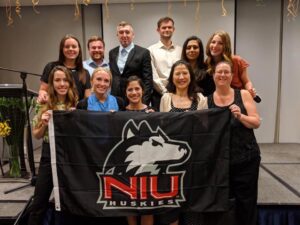
Charla Hawkins, Winter Europe 2026