Vietnam’s history has been shaped by both foreign rule and strong traditions of resistance. For over a thousand years, much of the region was under Chinese control, which influenced its culture, language, and governance. After independence in the 10th century, Vietnam faced Mongol invasions and later French colonization in the 19th century. During World War II, Japan briefly occupied Vietnam, after which the country declared independence under Ho Chi Minh in 1945. However, French attempts to reassert control led to the First Indochina War, ending in 1954 with the division of Vietnam into North and South.
The Vietnam War (1955–1975), involving the United States, ended with the victory of North Vietnam and the reunification of the country under communist rule. Since reunification, Vietnam has emphasized national rebuilding while preserving its cultural traditions.
Economy
Overview
Since launching market-oriented reforms in 1986 (ĐổiMới), Vietnam has shifted from a centrally planned system to a socialist-oriented market economy. This transformation spurred rapid growth, lifting millions of people out of poverty and making Vietnam one of Asia’s fastest-growing economies. Agriculture, particularly rice, coffee, and seafood, remains important, but manufacturing and exports of textiles, electronics, and machinery have become major drivers of the economy.
While political freedoms are limited, Vietnam has opened to the world through diplomacy and membership in organizations such as ASEAN and the United Nations. In recent decades, its government has balanced socialist ideology with pragmatic economic reforms, allowing the country to integrate into global trade while maintaining political control.
Geography
General
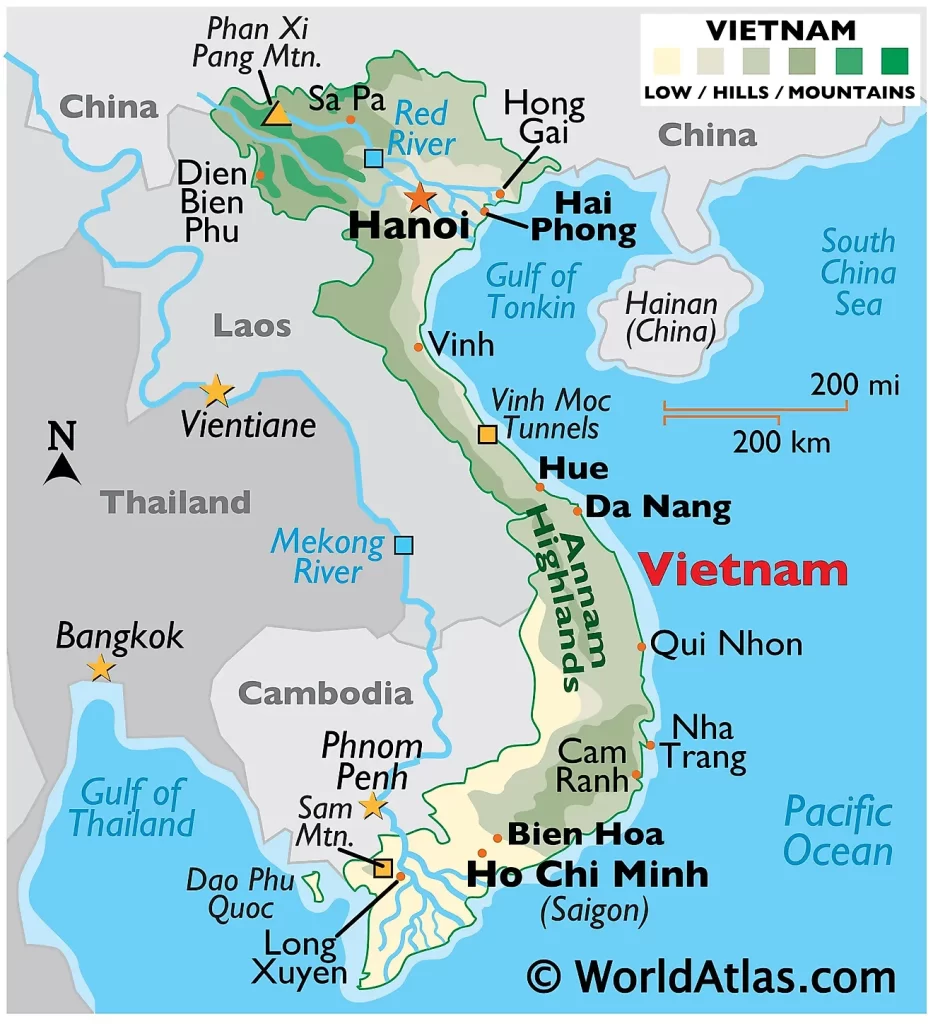
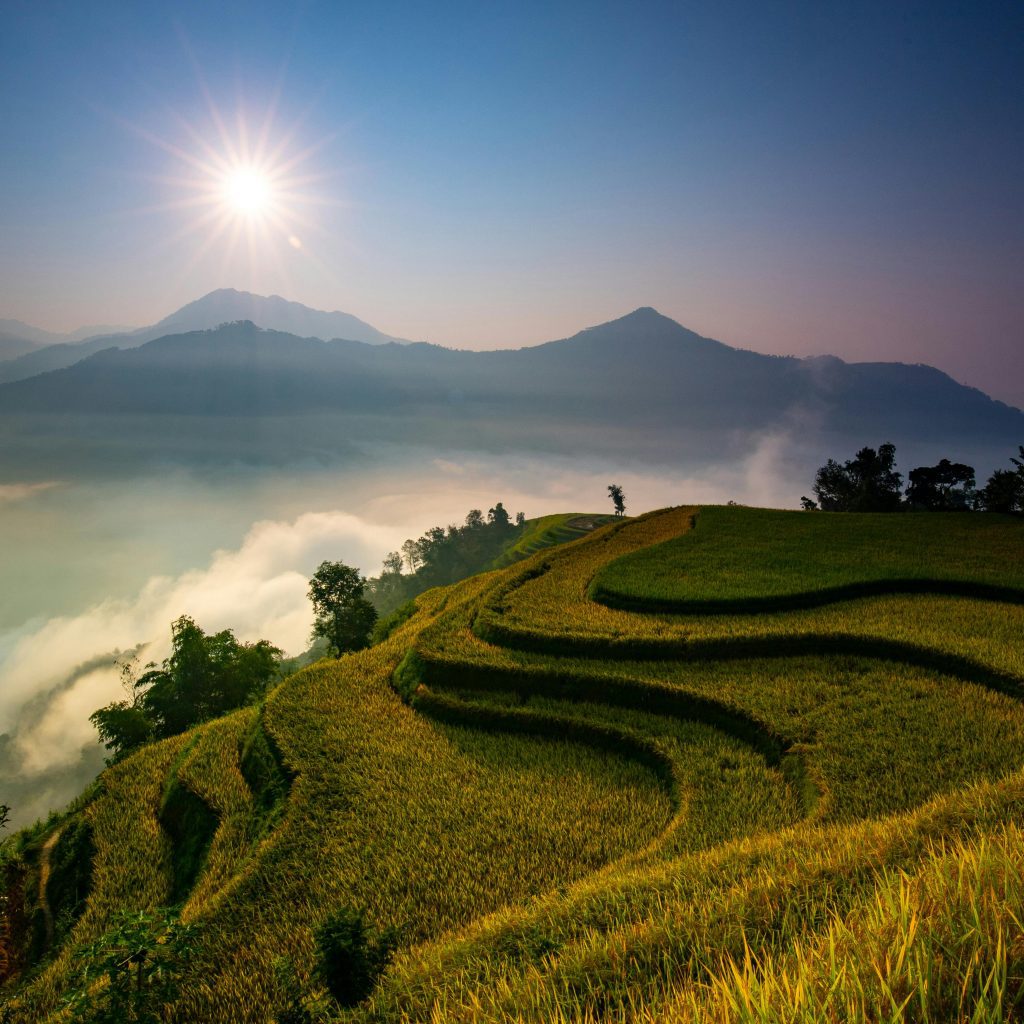
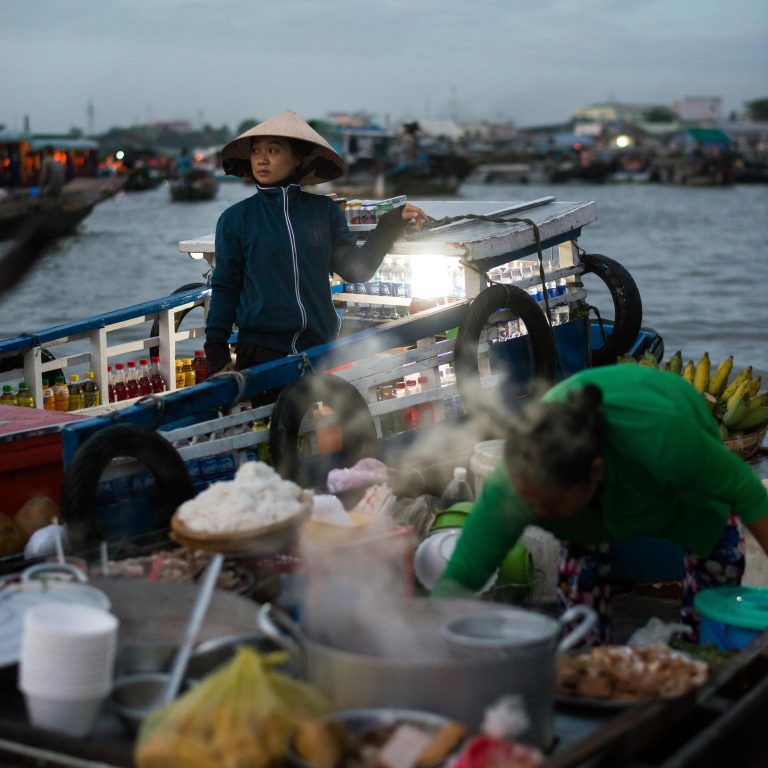
Vietnam is located on the eastern coast of the Indochinese Peninsula in Southeast Asia, with a long, narrow shape stretching more than 1,000 miles from north to south. The northern region features the Red River Delta and rugged mountains near the Chinese border, while the southern region is dominated by the Mekong Delta, a fertile area supporting dense populations and rice cultivation. Between these regions lies the Annamite (or Annamese) Range, which forms the country’s mountainous spine.
Coastline
Vietnam’s extensive 2,000-mile coastline borders the South China Sea and includes white-sand beaches and fishing villages. Ha Long Bay, with its limestone karsts and islands, is a UNESCO World Heritage Site, and Phong Nha-Ke Bang National Park is famous for housing some of the world’s largest caves.
Customs & Traditions
Overview
Vietnamese customs center on family, community, and respect for elders. Ancestor worship remains a key practice, with households maintaining altars to honor past generations. The most important holiday is Tet Nguyen Dan (Lunar New Year), which combines family reunions, gift-giving, and offerings to ancestors. Traditional clothing, such as the elegant aodai, is worn on festive and formal occasions. Vietnamese culture also celebrates numerous festivals tied to agriculture, religion, and local legends, often featuring folk music, water puppet performances, and community feasts. Hospitality is highly valued, and sharing meals is seen as a way to strengthen social bonds. Despite rapid modernization, these traditions remain central to Vietnamese identity.
Special Considerations
Accessibility
Prepare for at least some rain during your travel by packing a rain jacket or umbrella.
Dress modestly if visiting temples or monasteries. Remove hats and sunglasses before entering. Knees and shoulders covered. Bring light layers if necessary.
If you’re a coffee lover, Vietnam is known for its rich coffee culture and includes unique drinks like egg coffee.
Some smaller shops and stores may have family alters, be sure to not step too close to the display.
The normal ‘fingers crossed’ gesture to signify good luck in the west, is very rude and will be misinterpreted in Vietnam.
Slurping your noodles and finishing all the food on your plate shows appreciation for the food.
Never leave your chopsticks upright in a bowl, this resembles incense at a funeral.
U.S. Embassy & Consulate Resources
Understanding the differences between an Embassy, a Consulate, and a Mission
Check out this video from the National Museum of American Diplomacy explaining the difference between each organization and how they function together to protect US citizens traveling abroad. LINK
U.S. Embassies & Consulates in Vietnam
LINK to list of U.S. Embassies and Consulates in Vietnam
Vietnam Trivia
Fun Facts:
Vietnam is home to the world’s largest cave. With a unique and interesting story, it was originally discovered in 1990 by a local farmer, however, when he had returned to town to report his findings, he soon realized he could not recall where exactly it was located. I was lost for almost 20 years before once again being discovered and this time recorded both the location and size to eventually certify it at the world’s largest cave. It reaches nearly 9km in length as well as a volume of 38.5 cubic meters.